The Journal
My grandfather served as a soldier in the US Army's 48th Battalion in WWII from 1944 to 1945, a period when the Allied military crossed the German military's last major line of defenses and consolidated territorial gains leading up to the announcement VE Day on May 8th. A few years after my grandfather passed away, my family was looking at his handwritten journal, a detailed description of his experiences he carried through France and into Germany from 1944 to 1945. I took photos of the all the pages to make sure we preserved the text. I also decided to transcribe the text into a Google doc and share with my family since physically handling the journal would only accelerate its deterioration.
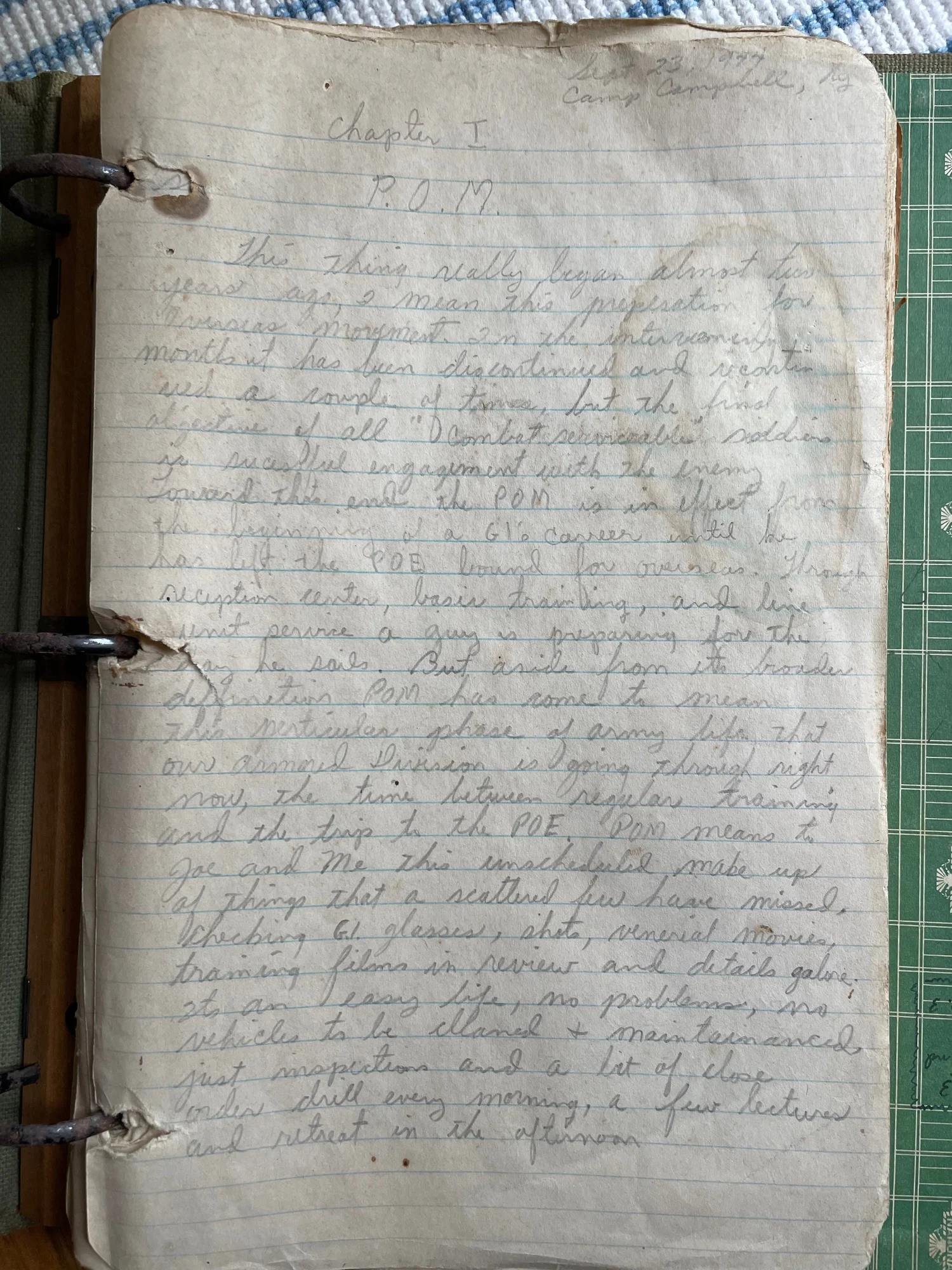
After completing the transcription, I noticed how abruptly the story ended. It was March 1945 and he was on his way back to his platoon in Lupstein, France after recuperating from an injury.
I'm not sure why he stopped. My grandmother said after he returned, his group was moving too fast for him to spend time writing. It's quite possible he thought he would pick up after the war. But while I wanted to preserve the integrity his original text, leaving the story without a conclusion was unsatisfying.
WE CAME TO FIGHT
After the war ended and he returned home, the Army sent him a book, “We Came to Fight! - History from New York to Jettenbach”, recounting the 48th Battalion's experiences from training at Camp Campbell, KY to fighting in France and Germany.
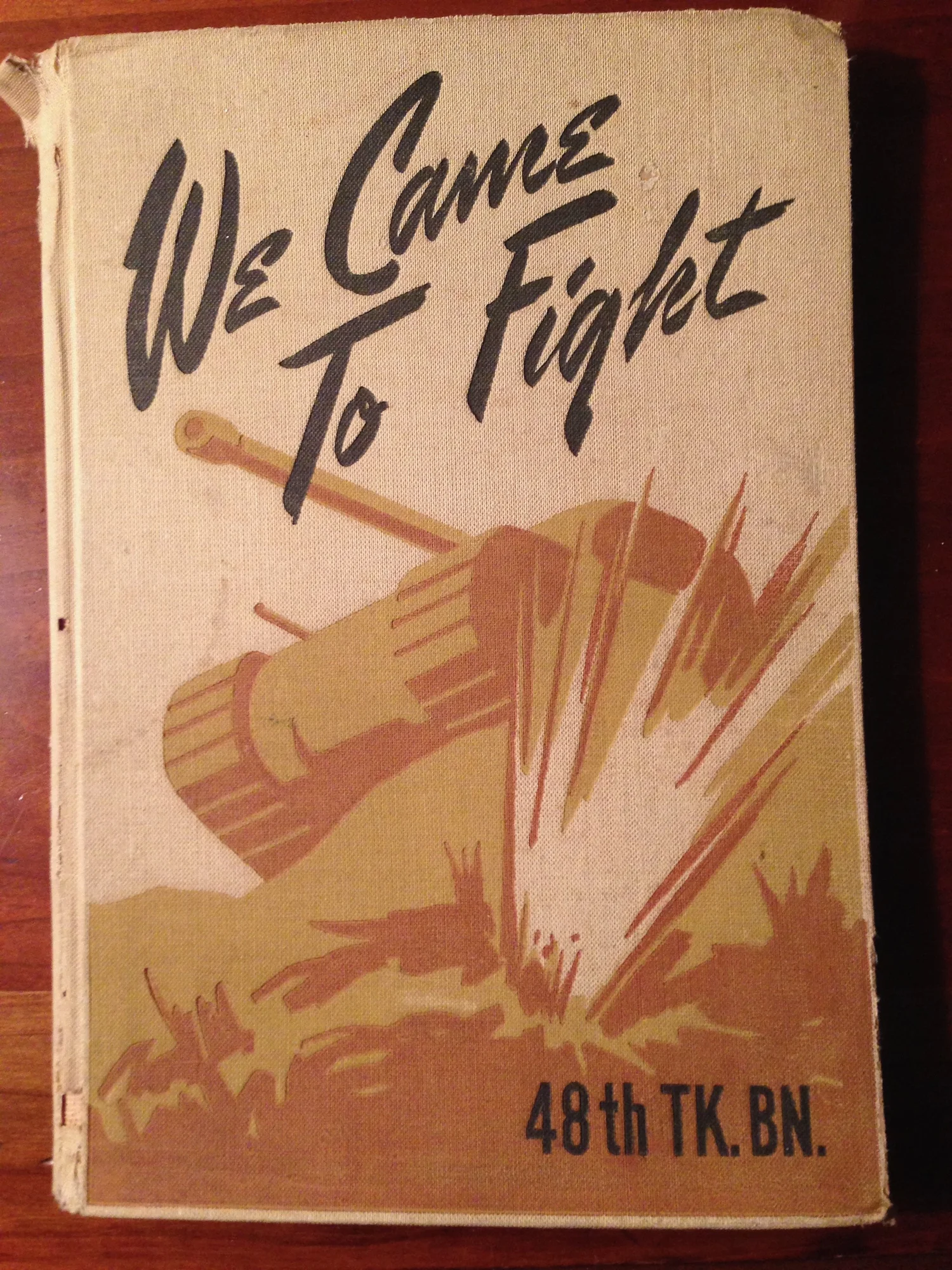
I also transcribed the full text from this book since, like my grandfather’s journal, it was not in good shape. Toward the end of the transcription, I realized I could just summarize the Battalion's activities from March to May as a conclusion to the journal. The problem was, the full text of “We Came to Fight” was greater than 11,500 words and I was too worn out from all the transcribing to attempt a summarization myself.
LLAMA-INDEX
Around January 2023, I discovered GPTIndex, an early framework for connecting documents to large language models. The project was later renamed LlamaIndex, and it quickly became a useful tool for building applications that let LLMs reason over external text. It seemed like a perfect fit for generating the historical summary I needed.
I used GPTIndex with OpenAI’s text-davinci-003 model to produce an initial summary of my grandfather’s final months in World War II. Drawing from the documents he left behind and other historical sources, the model helped assemble a plausible timeline of his journey out of Germany and back to the United States at the end of the war. Later, when revisiting the project, I reran the workflow using a newer version of LlamaIndex and GPT-4, which generated a more detailed account.
At the time, I simply didn’t have the time or emotional bandwidth to manually reconstruct the final chapter of my grandfather’s story. If you follow AI development, you’ve probably seen far more sophisticated applications of LLMs. In comparison, document summarization might seem basic. But in this case, it had real personal meaning. Even a relatively simple capability, summarizing thousands of words into a coherent narrative, helped me complete a project that had sat unfinished for decades.
Below is the original GPT-3 summary. The notebook also includes the later GPT-4 version for comparison.
The 48th Tank Battalion was later attached to the 42nd Infantry Division, departed Lupstein and traveled 110 miles north and east across the Rhine River at Worms, Germany. Along the way, they encountered enemy planes, destroyed buildings, released Allied prisoners of war, and encountered resistance from the German Army. After reaching Neustadt, they moved south and joined forces with the Third Army and Seventh Army, driving towards Munich. They then moved to Bad Staffelstein, where they encountered more resistance and released more Allied prisoners of war. They then assisted the Third and 45th Infantry Divisions in seizing the city of Nuremberg and then cut the Autobahn south of the city in the vicinity of Neumarkt in der Oberpfalz. After contending with blown bridges, roadblocks, enemy artillery, mortar fire, anti-tank and small arms fire, they reached the town of Wildflecken. They then moved to Neustadt, where they consolidated their gains and posted, leading up to the announcement of VE Day, on May 8th.